
in 23rd Millennium Docs Against Gravity Film Festival by Igor Angjelkov
At the 23rd edition of Millennium Docs Against Gravity in Warsaw, the FIPRESCI Award went to A Fox Under a Pink Moon, a documentary by Iranian filmmakers Soraya Akhalaghi and Mehrdad Oskouei. Through phone footage, animation, and deeply personal testimony, the film transforms one Afghan girl’s refugee journey into a powerful reflection on art, survival, and human dignity.
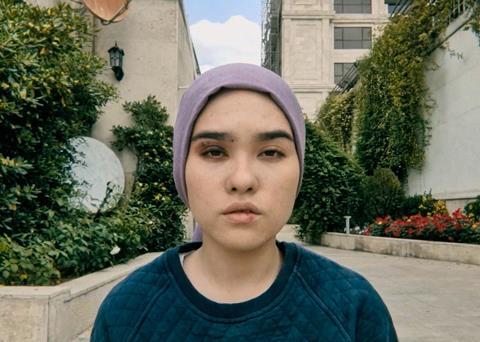
“Beauty will save the world,” said the legendary Fyodor Dostoevsky. But can the nobility of art save someone’s individual life? This eternal question, around which many debates have unfolded throughout history, finds a compelling answer in A Fox Under a Pink Moon, laureate of the FIPRESCI Prize at the 23rd edition of the Millennium Docs Against Gravity festival in Warsaw. In a fierce competition at one of Europe’s most respected festivals dedicated to creative documentary cinema, the film by Soraya Akhalaghi and Mehrdad Oskouei stands out through images that remain with the viewer long after the screening ends.
The 16-year-old Afghan protagonist documents her refugee journey with her phone. She makes several attempts to enter the European Union through Turkey, but is repeatedly deceived, robbed, and abandoned. The dream of reaching Austria, where her mother awaits her, remains painfully out of reach. To endure this hopelessness, she turns to art. She creates sculptures whose tormented faces reflect her own fate.
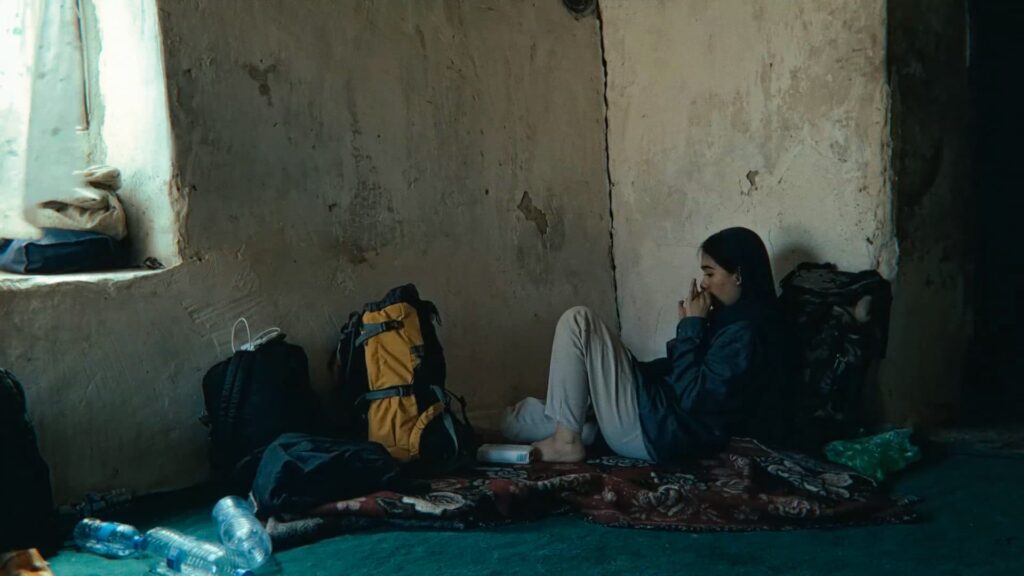
Soraya has been married for several years to a rapist who beats his underage wife whenever anger overtakes him. She also records the wounds left by this violence. Yet she does not complain. Instead, she returns to the artistic process, creating vivid paintings full of color — the very thing missing from her devastated life. But in her eyes, one recognizes the will and the energy to destroy the world itself, if only she chose to do so. And, in the end, she succeeds in transforming it.
I am generally not a fan of creative documentaries shot on phones, but A Fox Under a Pink Moon flows across the cinema screen with such confidence that one quickly forgets the medium through which it was captured. The film is so masterfully constructed that it transcends conventional storytelling. Refugee narratives have dominated contemporary documentary cinema in recent years, approached from countless perspectives, but the protagonist, in collaboration with Mehrdad Oskouei, discovers an authentic and deeply personal way of describing the world we live in — helping us to understand it more clearly.
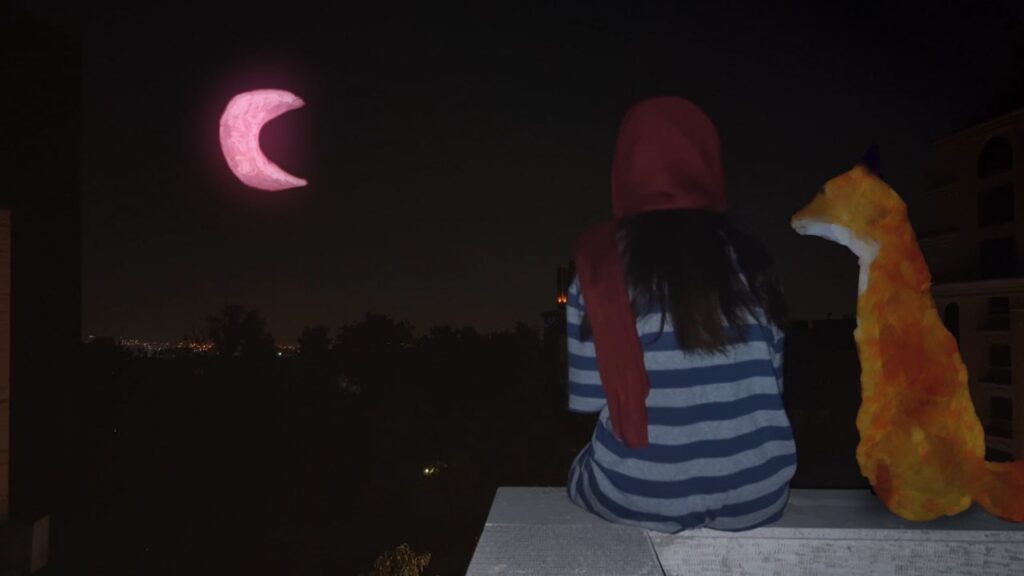
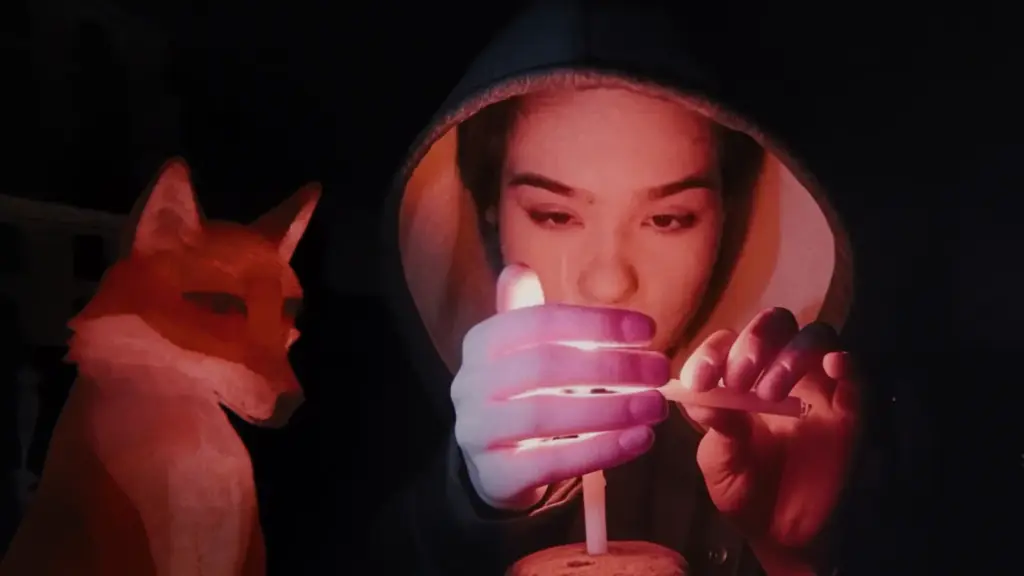
Suddenly, phone footage is no longer associated with self-indulgent selfies, but becomes a powerful instrument for exposing the emotional and psychological condition of a teenage girl confronted with the injustice of history. Then comes the force of art itself. Through animated sequences dominated by animal figures, the film delves into human emotional psychology, portraying the fragility of this sad yet beautiful world in which we all seek our own place beneath the sun.
Hence the perfection of the title: the heroine must be as wise as a fox in order to survive, while refusing to abandon her rose-colored dreams beneath the glow of the moon. Human beings must continue to dream in order to remain whole, resilient, and true to themselves.
Legendary German filmmaker Wim Wenders stated at the most recent Berlinale that films can change the world, though not necessarily in a political sense. “No film has changed the opinion of any politician. But we can change the idea that people have about how they should live.” At the opening of this year’s Cannes Film Festival, meanwhile, jury president Park Chan-wook argued that cinema cannot be separated from politics and the contemporary reality in which films are made.
The documentary by the Akhalaghi–Oskouei tandem fits perfectly within both of these perspectives. It raises difficult questions while searching for equally difficult answers, attempting to understand the complex political realities in which not only the film’s heroine, but countless people around the world, currently find themselves.
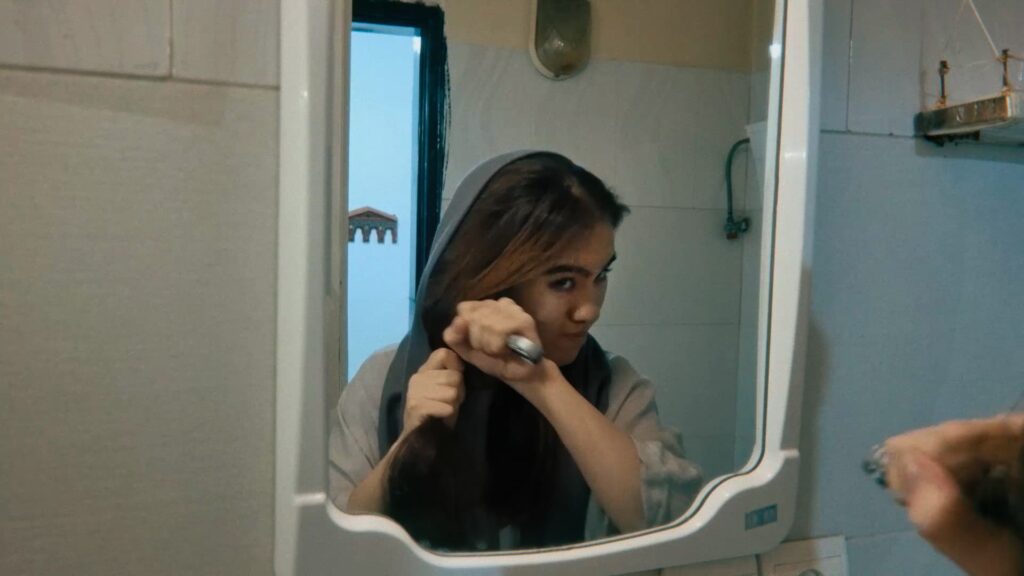
This is precisely the power of moving images: to question the circumstances in which individuals — and humanity itself — exist, while simultaneously interrogating the medium through which a work of art is created. Whether Soraya originally intended for her phone recordings to become a film remains unknown, but one thing is certain: the decision to share her story with the world ultimately transformed her life.
Returning to the beginning of this text, one realizes that Dostoevsky may indeed have been right. Behind the bombastic headlines dominating the media, there are always real people struggling to preserve a minimum of human dignity in a world that is often unjust, chaotic, and yet still filled with beautiful colors.
© FIPRESCI 2026
The original post on FIPRESCI site is on a next link: